Shell//555
SHELL//555 is not an autopilot. It does not take the wheel, it does not correct a line, it does not intervene. It is an observation and behavioural-analysis architecture built for a single purpose: to record what a human being does at the limit, precisely enough that the recording could be replayed.
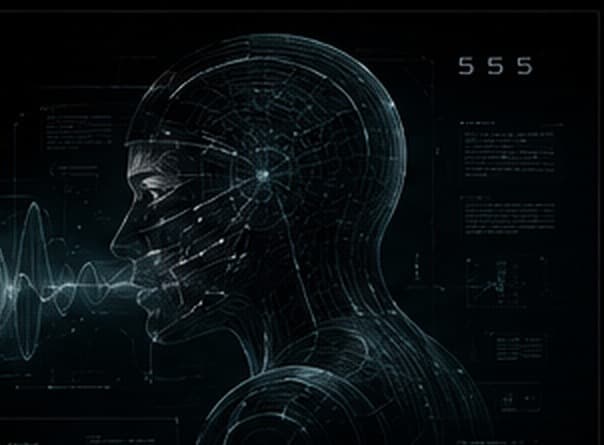 SPECTRE BUILD // OBSERVE
The shell
The machine. Chassis, battery, motors, sensors — the vessel, and nothing more.
The ghost
The driver. Perception, fear, judgement, the thing that decides before it knows it has decided.
The spectre
The trace left between the two. Not a copy of the driver. The shape of the space he moved through.
What it watches
08 OF 64 SHOWN
Steering micro-input
Corrections below conscious threshold
Trajectory
Deviation from the modelled optimum
Reaction latency
Stimulus to first input
Hesitation
Input reversal within 120 ms
Respiration
Chest band, cabin-side
Cardiac rhythm
Continuous, with variability window
Decision under load
Commit, abort, defer
Human–machine bond
Agreement between intent and model
The Spectre
After the first laps the model is crude — it predicts a corner the way a stranger would. After a hundred, it predicts the corner the way Ghost does. After three hundred, it starts predicting the mistakes he does not make anymore, which is the part nobody on the team likes to talk about.
The convergence graph below is a narrative visualisation. It illustrates an idea from the film; it is not real telemetry.
Driver memory
The architecture keeps every run. Not as video — as intent. A stored run can be scrubbed, compared, subtracted from another. Two drivers can be laid over each other and the difference between them read like handwriting.
Human–machine interaction
SHELL//555 speaks in as few words as possible: a line on the display, a delta, a warning tone Ghost chose himself. The team's rule is that the system may describe, and may never suggest. In the last act, somebody breaks that rule.
What the architecture keeps is not video. It is a sheet like these: a shape, three numbers and two sector codes, comparable with every other session ever recorded. Put two of them side by side and the comparison writes itself — which is the entire point.
55598
Solo reconnaissance — driver alone
SESSION 001
- Reference
- 11min
- Length
- 6.3km
- Time
- 05:58
SAM//SOL—SSL
Cabin channel — Dubstep 555
Closed circuit — Belgium, location withheld
55598
Solo reconnaissance — driver alone
SESSION 002
- Planned
- 19min
- Reference
- 11min
- Length
- 12km
−08 min on the planned time
CITADELLE—SSL
Cabin channel — Electro 555
Closed circuit — Belgium, location withheld
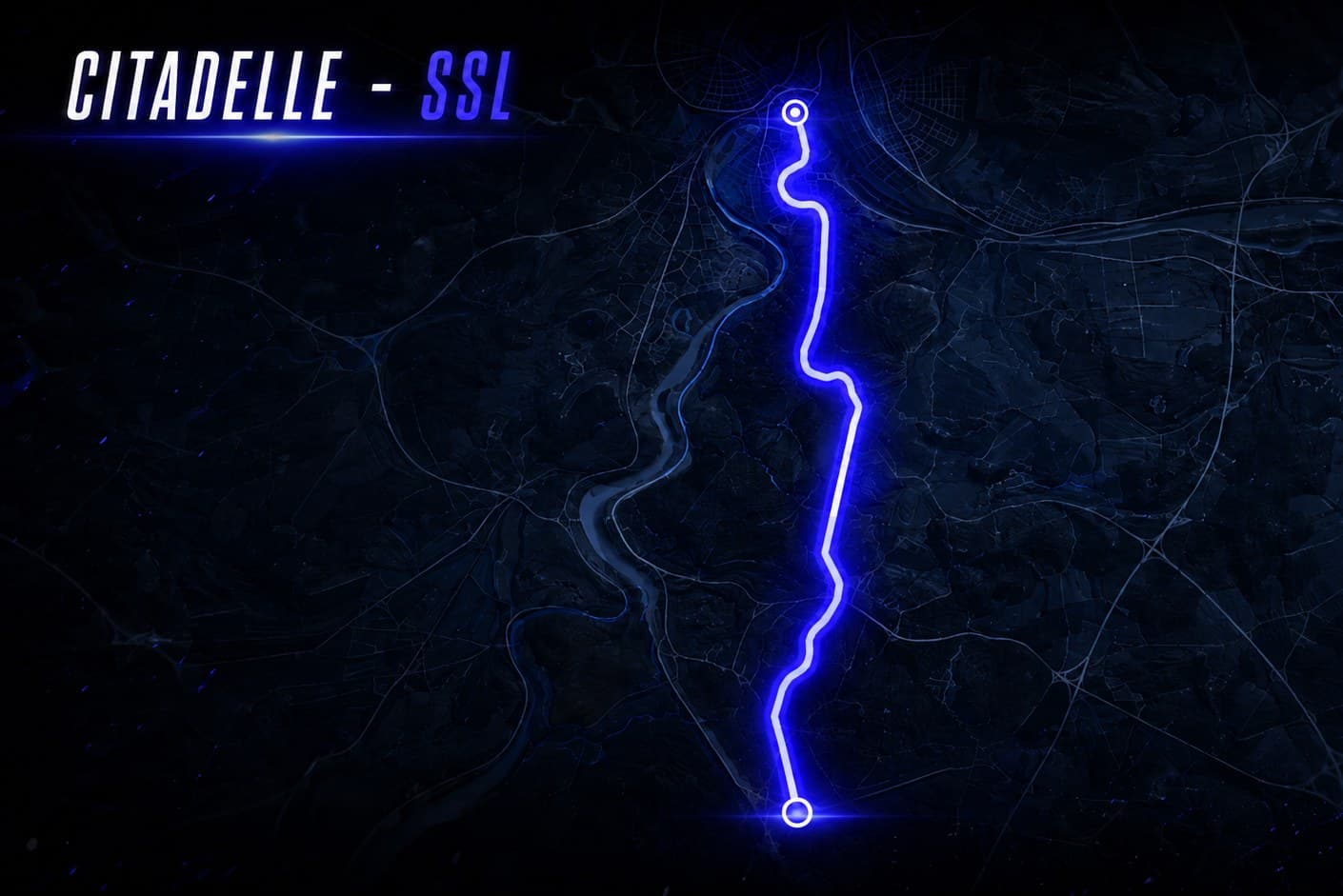 // SHELL//555 — classified run data
DORMANT
Powered, not observing. Pre-session default.
OBSERVE
Recording, no output to the cabin.
MIRROR
Model running alongside the driver, delta visible.
SPECTRE
Model complete for this circuit. Reserved for post-run analysis.
The unknown fragment
During integration, the build log records a module nobody wrote. It does not come from the vehicle manufacturer. It does not come from Ghost. It compiles cleanly, it touches nothing, it asks for nothing — and it carries a signature.
In the film, no one is ever able to authenticate it. It is presented, deliberately, as a claim rather than a fact.
Signature
S. NAKAMOTO
CHECK FAILED — UNVERIFIED
module ██-555-x
origin NOT VEHICLE
origin NOT DRIVER
compile OK // touches nothing
SHELL//555 is a fictional on-board architecture written for this film. It is not a product, not a driver-assistance system, and does not describe any existing vehicle software.