Powertrain
OUTPUT // WITHHELDThree-motor electric layout, torque vectored per axle. Output figures are deliberately not published in the film's universe: the run is timed, not advertised.
Everything on this page describes a vehicle written for a film. The chassis is a speculative next-generation electric roadster; the rest — the architecture, the instrumentation, the livery — belongs to the story.
The car that already exists
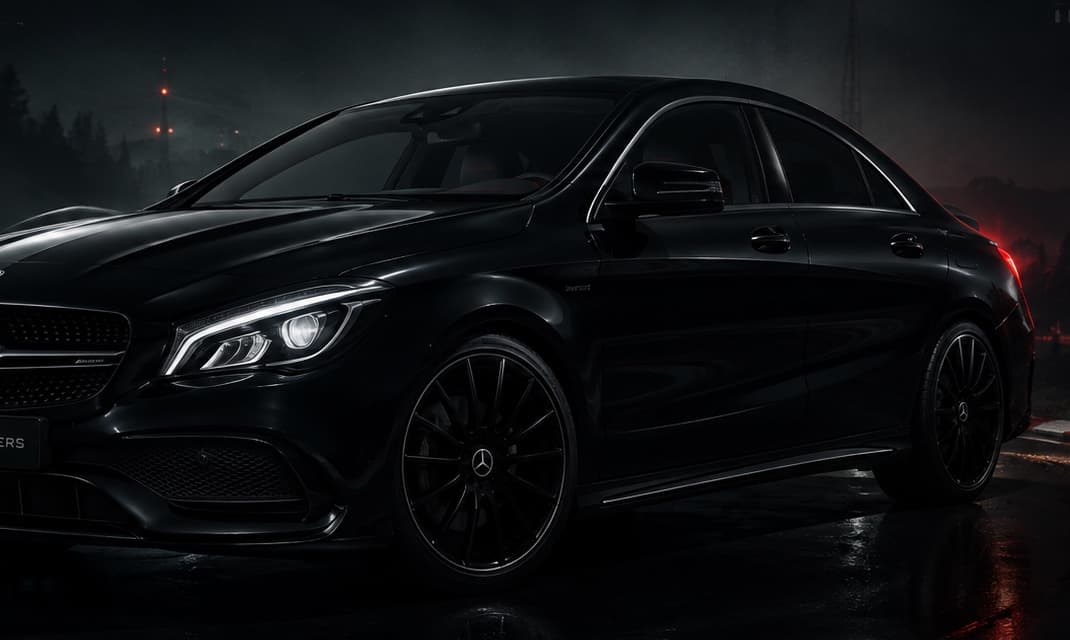 REAL VEHICLE
Before the shell, there is a scout. A 2017 compact saloon with a 1.5-litre diesel and 109 horsepower — the least glamorous object in the entire project, and the one that has done the most work.
It is what Ghost actually drives when there is nothing to prove: walking the venue at road speed, timing the light at dawn, counting marshal posts, learning where the surface changes. Every one of the eleven steps was written from a passenger seat in this car.
It matters because it is ordinary. The run is not made possible by an exceptional machine. It is made possible by three hundred unremarkable laps in a car anybody could buy.
Outside the story, it is also the first vehicle of the production itself: the car the Road Sessions are filmed in, and the one the project owns while everything else is still being raised. See the roadmap.
Privately owned production vehicle, identified by model for description only. No affiliation with, sponsorship by or endorsement from the manufacturer is claimed or implied.
Everything below this line is the concept: a vehicle written for the film, which does not exist.
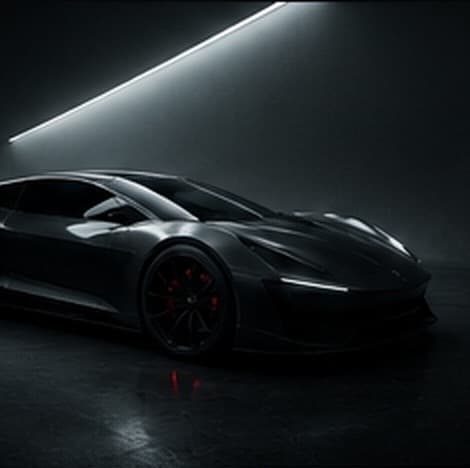 CONCEPT BUILD
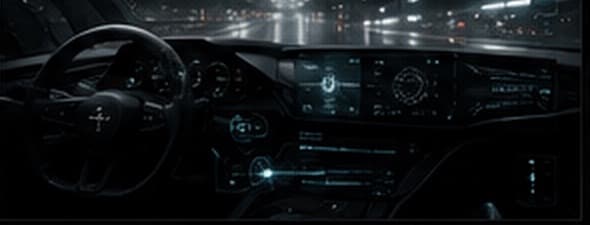 CABIN
CABINLivery zones and proportion study
ZONES 01/06 // 5 OPEN
Concept vehicle based on a speculative next-generation electric roadster. No official affiliation implied. No 3D model or photography exists yet: every view on this page is a vector placeholder, built to be replaced.
MANUAL
Every assistance system disabled. No stability control, no torque shaping, no observation. The baseline the whole protocol is measured against.
SHELL//555
The architecture observes without intervening. It records, models, and displays a single delta line. It never steers.
Three-motor electric layout, torque vectored per axle. Output figures are deliberately not published in the film's universe: the run is timed, not advertised.
Structural pack with a dedicated pre-run conditioning cycle. Both runs start from the same state of charge and the same cell temperature — otherwise the comparison is meaningless.
Independent loops for pack, inverters and cabin. The cabin loop exists for one reason: the passenger has to be able to think clearly enough to say stop.
Sixty-four channels, logged locally and mirrored to the timing tent. Published in full after each run, raw, without smoothing.
Roll structure, six-point harnesses, HANS-type restraint, on-board extinguisher, dual extraction points, medical cover at two posts. Nothing about the run is improvised.
A single guarded switch on the passenger side. It cuts propulsion and ends the run. It is the most important component in the car.
Matte carbon base with a single reflective break line. Partner marks are applied to defined zones — the livery evolves as the programme does.